
Business · Mauritius–Canada
Doing Business Between Mauritius and Canada
Exploring trade, partnerships and opportunities between two countries with strong connections.
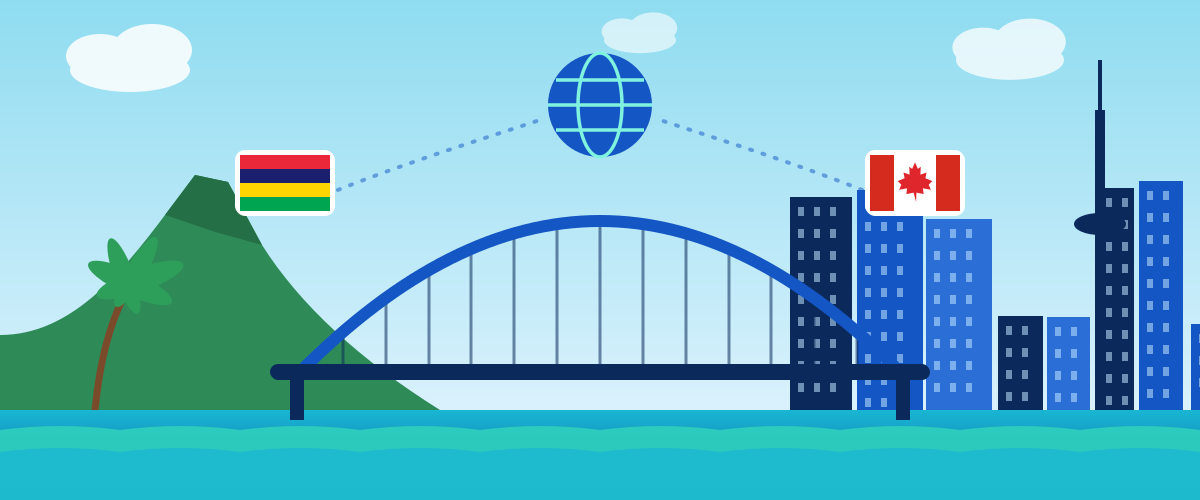
Mauritius and Canada may be separated by thousands of kilometres, but businesses and entrepreneurs can find meaningful opportunities between the two markets.
For Mauritian entrepreneurs
Canada can represent access to a large and diverse market, new partnerships, professional networks and potential investment opportunities.
For Canadian businesses
Mauritius can provide a gateway to the Indian Ocean region and a valuable connection to African and international markets.
But successful international business isn't simply about finding a buyer or sending a product overseas.
It starts with understanding the market, building trust and getting the fundamentals right.
Why Mauritius and Canada?
Mauritius
Mauritius has developed a diverse economy with strengths across areas including financial services, tourism, technology, professional services, manufacturing and international business.
Canada
Canada has a large, diversified economy with significant opportunities across technology, professional services, natural resources, education, food and agriculture, manufacturing and many other sectors.
There are also important people-to-people connections between the two countries. Mauritians living in Canada can play a unique role as connectors between markets.
They understand one market because they grew up in it, and understand the other because they now live and operate in it.
That perspective can be extremely valuable.
Start With the Market, Not the Product
One of the most common mistakes entrepreneurs make when entering a new country is assuming that a successful product or service will automatically succeed somewhere else.
Before approaching potential customers or partners, ask:
Market research should come before significant investment.
Understand the Business Environment
Before entering a new market, understand the basic business environment. This includes:
The rules can differ significantly between Mauritius and Canada. Don't assume that a process that works in one country will work exactly the same way in the other.
For regulated activities, speak with the appropriate professional or government authority before proceeding.
Choose the Right Partnership Model
There isn't one way to do business internationally. Depending on the opportunity, you could consider:
The right model depends on the product, market, regulations, investment required and level of control you want.
Don't Underestimate Trust
International business is built on trust. A potential partner may want to know:
- Who are you?
- Where are you based?
- How long have you been operating?
- Who are your customers?
- Can you deliver?
- What happens if something goes wrong?
This is where having a genuine connection to both markets can become an advantage.
A warm introduction can sometimes be more valuable than a cold sales email.
Think About Logistics Early
If you're trading physical products, logistics need to be considered from the beginning. Think about:
Your selling price needs to account for the real landed cost, not simply the purchase price.
For services and digital products, the logistics may be simpler, but payment processing, contracts, taxation and data/privacy requirements still need consideration.
Currency Matters
Mauritian rupees and Canadian dollars are different currencies, and exchange-rate fluctuations can affect margins. When pricing an international transaction, consider:
- Which currency the contract uses
- Which party carries exchange-rate risk
- Payment processing fees
- International transfer costs
- Currency conversion rates
- Timing of payment
A deal that looks profitable at one exchange rate may look very different later.
Build Relationships Before You Need Them
Don't wait until you have a product to sell before building your network. Start connecting with:
Attend events in both markets where possible. Follow relevant organizations online. Have conversations.
International business often develops through relationships that take months, or years, to mature.
Start Small
You don't necessarily need to launch a major international operation immediately. Start with a pilot. For example:
Learn what works. Then expand.
A small, well-tested international partnership can teach you more than a large investment based on assumptions.
The Mauritius–Canada Opportunity
There is something particularly valuable about entrepreneurs who understand both sides. They can identify opportunities that someone looking at only one market might miss.
A Mauritian entrepreneur in Canada might recognize a product or service that could work in Mauritius. A Canadian entrepreneur with connections to Mauritius might identify opportunities to access the Mauritian or wider regional market.
And sometimes the opportunity isn't about exporting a product at all. It could be:
Before You Make Your First International Deal
0 of 11 done
Ask yourself:
Build the Bridge
Doing business between Mauritius and Canada isn't simply about moving products or money between two countries. It's about moving ideas, expertise, relationships and opportunities.
The strongest international businesses are often built by people who understand that markets are made up of people.
If you understand both cultures, know how business works in both environments and can build trust between them, you may have something incredibly valuable:
The ability to connect two worlds.
Naarks is building that bridge.
Naarks. More than a service. A connection.
Ready to start your journey?
Book a free consultation and we will point you to the right service.
Book a free consultation